
Best Halal Food in Kashmir for Malaysians: Where to Eat & What to Try
If you're flying in from Kuala Lumpur or Penang, here's good news right away. Kashmir is a Muslim-majority region, so Halal food isn't a special category here. It's simply the food. From roadside kebab stalls to five-star hotel kitchens, you won't need to search hard or ask twice.
As someone who plans Kashmir holidays for a living, I get the same question from almost every Malaysian guest: "Will I find food I'm comfortable eating?" The honest answer is yes, and you'll likely enjoy it more than you expect. The shared Muslim culture between Malaysia and Kashmir makes dining here relaxed rather than something you need to plan around.
This guide covers what to eat, where to eat it, and a few practical tips that only come from years of taking guests through the valley.
If you're planning your holiday, you can also explore our Malaysia to Kashmir Travel for complete travel arrangements, including hotels, transport, sightseeing, and local assistance.
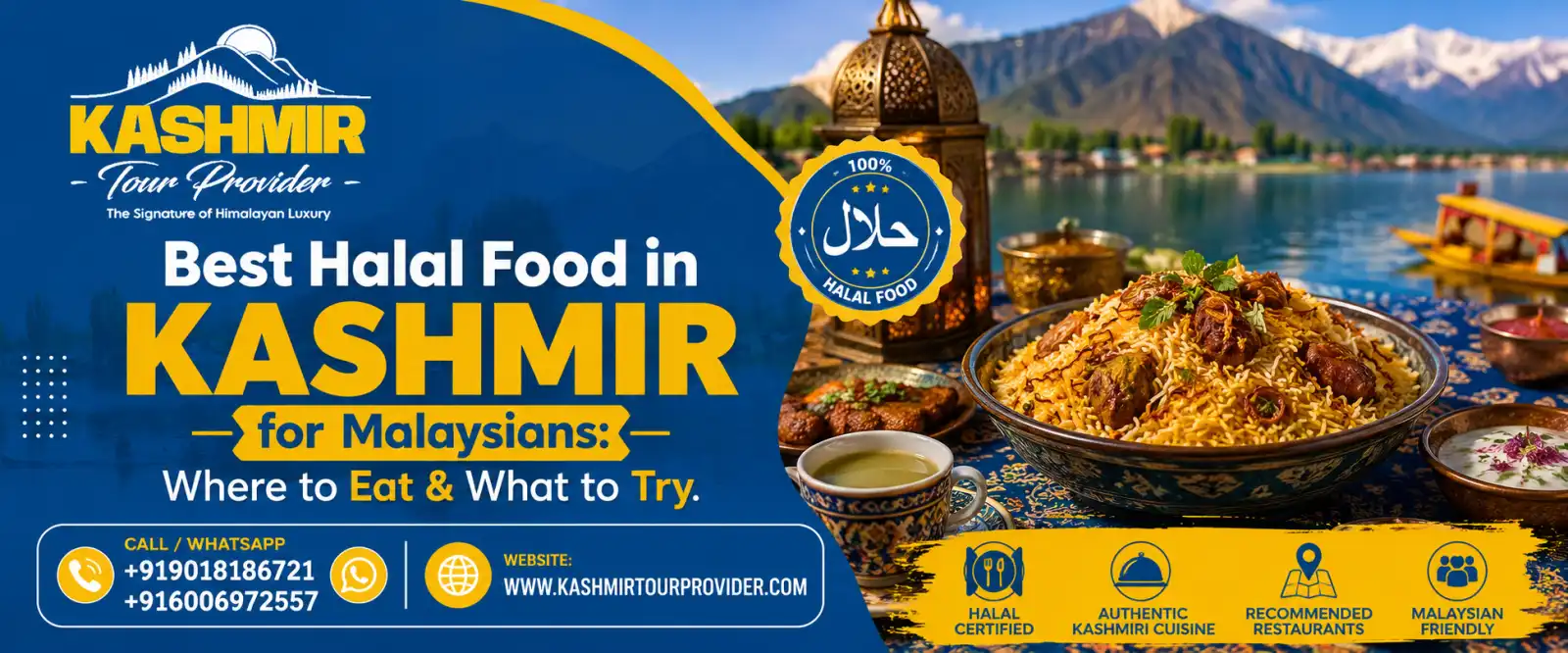
Must-Try Core Kashmiri Delicacies
Kashmiri food doesn't chase heat the way some other Indian regional cuisines do. Instead, it leans on slow cooking and warm, layered spices like saffron, fennel, and cardamom. The result is rich and aromatic rather than sharp or overwhelming.
Wazwan: The Royal Feast
Wazwan is the centerpiece of Kashmiri cuisine, and honestly, no trip here feels complete without trying it. It's a multi-course meal prepared by trained chefs called Wazas, who often spend years learning the craft. A full Wazwan can include anywhere from 7 to 36 meat dishes, traditionally served on a large copper platter called a Trami that's shared between four guests.
If you're short on time, many restaurants offer a smaller "mini Wazwan" with the highlight dishes. This is a practical option for travelers who want the experience without committing an entire evening to it.
Rogan Josh
This is the dish most visitors recognize by name, and for good reason. It's a rich lamb curry with a deep red color that comes from mild Kashmiri red chilies and cockscomb flowers, known locally as Mawal. There's no artificial coloring involved, so despite the bold appearance, it's flavorful without being overly spicy.
Gushtaba and Rista
These two dishes often confuse first-time visitors because they look similar but taste quite different. Both are made from finely pounded mutton, formed into soft, almost spongy meatballs. Rista comes in a spicy red gravy, while Gushtaba is cooked in a tangy yogurt-based broth and traditionally served as the final course of a feast.
Tabak Maaz
If you enjoy crispy, savory meat, don't skip this one. Tabak Maaz is lamb ribs, deep-fried in ghee with turmeric, until the outside turns golden and the meat practically falls off the bone. It's one of the dishes my guests ask me to reorder most often.
Why Malaysians Tend to Love Kashmiri Food
There's a reason Malaysian travelers often settle into Kashmiri meals faster than other international visitors. The eating patterns are surprisingly familiar.
Rice is the staple. Just like back home, a proper Kashmiri lunch or dinner is built around steamed basmati rice. Flatbreads like Naan or Roti show up mostly at breakfast.
Kashmiri Pulao adds sweetness. This fragrant rice dish is cooked with saffron and milk, then topped with ghee, almonds, raisins, and cashews. It's a good entry point if you want something gentler before trying the heavier meat courses.
In addition, the overall approach to hospitality, generous portions, shared platters, and an emphasis on guests feeling welcome, will feel familiar if you've grown up with Malaysian dining customs.
Top Halal Dining Spots in Srinagar
Srinagar has the widest range of reliable, tourist-friendly restaurants in the valley. Here are the places I consistently recommend.
- Ahdoos (Residency Road): A legendary name for indoor Wazwan. The quality has stayed consistent for decades, which matters more than it sounds in a region where restaurant standards can vary.
- Mughal Darbar: A favorite among international travelers, particularly for its Rogan Josh and traditional meat platters. Expect a fuller, more formal dining setup.
- Parsa's: Casual, modern, and easy on the wallet. The rolls and tandoori meat options here are popular with younger travelers and families who want something quick between sightseeing stops.
- Shamyana Restaurant: Set right by Dal Lake, so you get good local food alongside genuinely scenic views. It's a nice choice for a relaxed evening meal.
As a general note, book ahead for dinner during peak season (May to September), since these spots fill up quickly with both local and international guests.
Beverages and Comfort Warmers
Kashmir gets cold, sometimes very cold, even in shoulder seasons. As a result, tea culture is built into daily life here, not just offered as an afterthought.
Kashmiri Kahwa
This is a green tea infused with saffron, cinnamon, cardamom, and crushed almonds, brewed traditionally in a brass kettle called a Samovar. It's commonly served after heavy meals or during cold sightseeing days, and most visitors find it genuinely soothing rather than just a novelty drink.
Noon Chai (Pink Tea)
This one surprises a lot of first-time visitors. Noon Chai is a salted, pink-colored tea made with milk and a touch of baking soda, often topped with crushed pistachios. It's savory rather than sweet, and it's usually paired with local bakery breads like Lavasa or Girda. I'd suggest trying a small cup before committing to a full pot, since the flavor is quite different from what most travelers expect from tea.
Practical Tips for Malaysian Tourists
After years of hosting guests from Malaysia, here are the details that genuinely make a difference.
- Don't over-order. Kashmiri portions are large, and meat courses are filling. A common mistake is ordering too many dishes at once, only to leave most of it untouched. Start smaller and order more if needed.
- Try houseboat dining on Dal Lake. If you're staying on a houseboat, your hosts will usually prepare fresh, home-cooked Halal meals. This is one of the best ways to enjoy Kashmiri food, since you can ask them to adjust the spice level to your taste.
- Carry some cash. Major restaurants accept cards and digital payments without issue. However, street-side kebab stalls around Lal Chowk or Khayam Chowk, along with tea vendors in places like Gulmarg, often prefer cash. It's worth keeping a reasonable amount of local currency on hand for these stops.
- Expect seasonal variation in availability. Some higher-altitude spots, such as those near Gulmarg or Sonamarg, have limited food options during winter months when snow affects road access and supply runs. Plan your higher-elevation meals around your itinerary, not the other way around.
Kashmir offers one of the more comfortable Halal food experiences you'll find while traveling internationally, and that's not an exaggeration meant to sell a trip. It's simply how dining works here. Whether you're sitting down for a full Wazwan feast or grabbing kebabs from a street stall, you can eat without hesitation or constant questions about ingredients.
My honest advice: pace yourself with the meat-heavy courses, say yes to the tea, and don't be afraid to ask your houseboat host or local guide for recommendations. That's usually how you find the meals you'll remember long after the trip ends.