
Malaysia to India Currency Exchange Guide: MYR to INR Travel Tips
Planning a trip from Malaysia to India? Sorting out your money before you land will save you time, stress, and a fair bit of cash. India still runs largely on physical currency for everyday spending, even as digital payments boom in the cities. Here's how to handle your Ringgit wisely, based on what actually works on the ground. If you're planning to explore Kashmir as part of your journey, our India Kashmir holiday packages from Malaysia include hotels, private transport, airport transfers, sightseeing, and local assistance, making your trip smooth from arrival to departure.
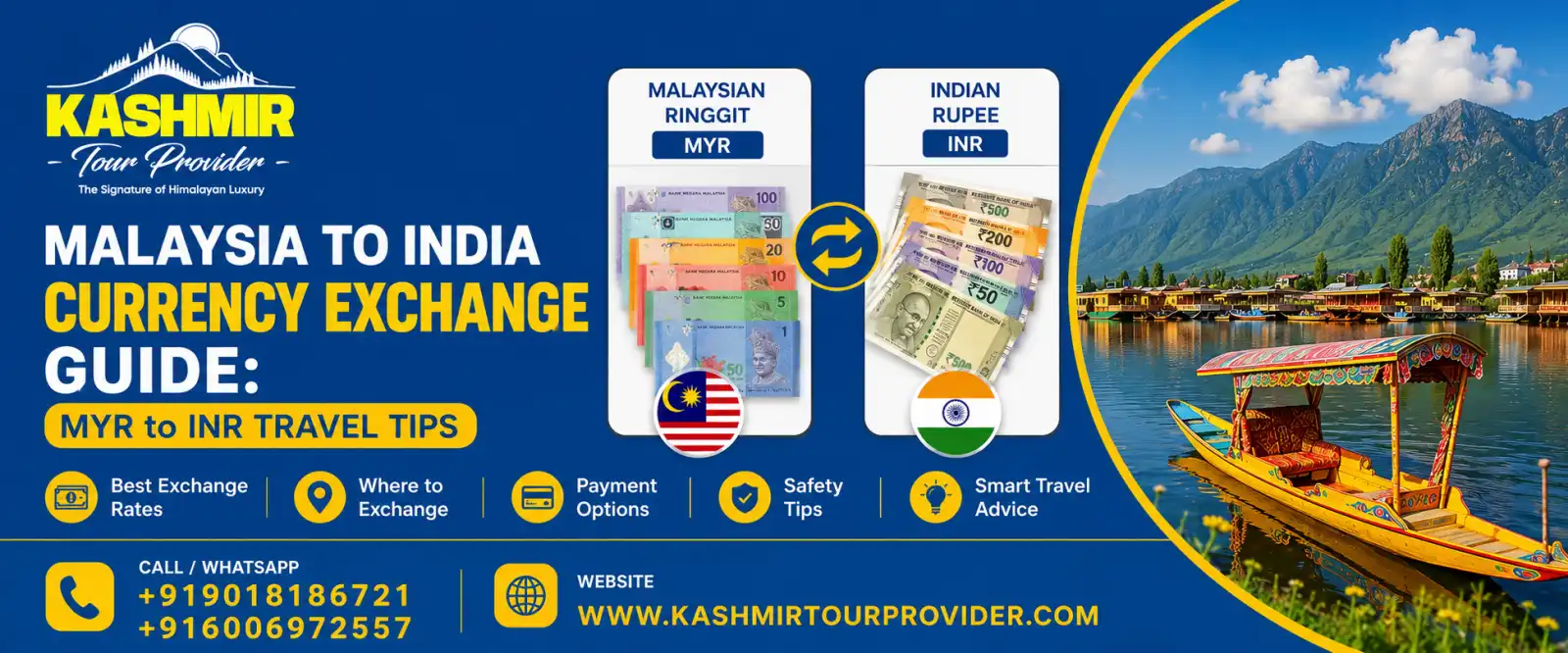
Current Exchange Rate and Cash Limits
As of now, 1 Malaysian Ringgit (MYR) gets you roughly 23.24 Indian Rupees (INR). For quick mental math while bargaining at a market, just multiply your Ringgit amount by 23. It won't be exact, but it gets you close enough to negotiate confidently.
Here's something many travelers don't realize: you cannot bring large amounts of Indian Rupees into India from abroad. Indian customs law caps foreign tourists at 25,000 INR (about 1,075 MYR) in physical cash on arrival. So don't bother pre-buying a stack of Rupees in Kuala Lumpur. It's both unnecessary and against the rules.
The Smartest Way to Exchange Money
Skip the airport counters. Airport money changers, whether in Malaysia or India, almost always offer poor rates. Markups of 6% to 10% above the market rate are common, which adds up fast on a longer trip.
Instead, follow this approach:
- Carry clean notes. Bring crisp, undamaged USD or MYR notes. Indian money changers, especially in cities like Delhi, Mumbai, and Chennai, are picky about torn or heavily creased currency and may refuse to accept it.
- MYR works fine in most cities. Major exchange counters in India accept Ringgit without trouble. USD sometimes gets a marginally better rate, particularly in smaller towns or remote areas where MYR demand is lower.
- Keep your encashment certificate. Every time you exchange cash at a licensed money changer or bank, ask for the receipt. You'll need it if you want to convert leftover Rupees back to Ringgit at the airport before you fly home. Without it, some banks will refuse the reverse exchange.
Cards and ATMs: What Actually Works
Many standard multi-currency travel cards don't support INR as a holding currency. This catches a lot of travelers off guard, since they assume their usual travel card will work everywhere. India's currency controls mean INR isn't freely traded internationally, so check this before you leave.
A better option is a modern travel card platform such as Wise. These let you hold MYR and convert it to INR at the mid-market rate the moment you swipe or withdraw, without the hidden markups of traditional forex providers.
ATMs are plentiful across Indian cities, including smaller towns. As a general rule, it's more cost-effective to make a few larger withdrawals from a reputable bank ATM, such as SBI, ICICI, or HDFC, than to carry large amounts of cash around with you.
One tip that saves real money: if a card terminal or ATM asks whether to charge you in MYR or INR, always pick INR. Choosing your home currency triggers Dynamic Currency Conversion, which usually comes with a worse exchange rate and an extra fee.
Understanding India's Cash and Digital Payment Mix
Cash still matters
Luxury hotels and upscale restaurants in major cities accept Visa and Mastercard without issue. However, you'll need cash for auto-rickshaws, street food stalls, local markets, and tipping. This is true even in well-developed tourist areas, so don't assume cards will cover everything.
Mind your denominations
Try to break 500 INR notes at hotels or larger restaurants rather than small vendors. Street sellers and rickshaw drivers often can't make change for big bills and much prefer smaller notes: 10, 20, 50, and 100 INR. Carrying a mix of denominations makes daily transactions much smoother.
The UPI gap
You'll see locals tapping QR codes everywhere using UPI (Unified Payments Interface), India's dominant digital payment system. For short-term visitors, this is one limitation worth knowing about upfront: UPI is tied to Indian bank accounts or local mobile numbers, so it isn't built for foreign tourists. A few international airports have started piloting "UPI for Foreigners" schemes, but coverage is still patchy. For now, a reliable travel card paired with some local cash remains the most practical setup for most Malaysian visitors on a short trip.
Quick Recap
- Don't pre-buy INR in Malaysia; customs limits make it pointless.
- Avoid airport money changers entirely.
- Bring clean MYR or USD notes and keep your encashment receipt.
- Use a Wise-style card for ATM withdrawals and card payments, always selecting INR at the terminal.
- Carry small notes for daily cash needs, since street vendors rarely have change for large bills.